
Recently, the national standard Technical Specification for Application of Data Processing Units in Intelligent Computing Clusters has been officially released. Resnics participated in its formulation as a drafting organization.
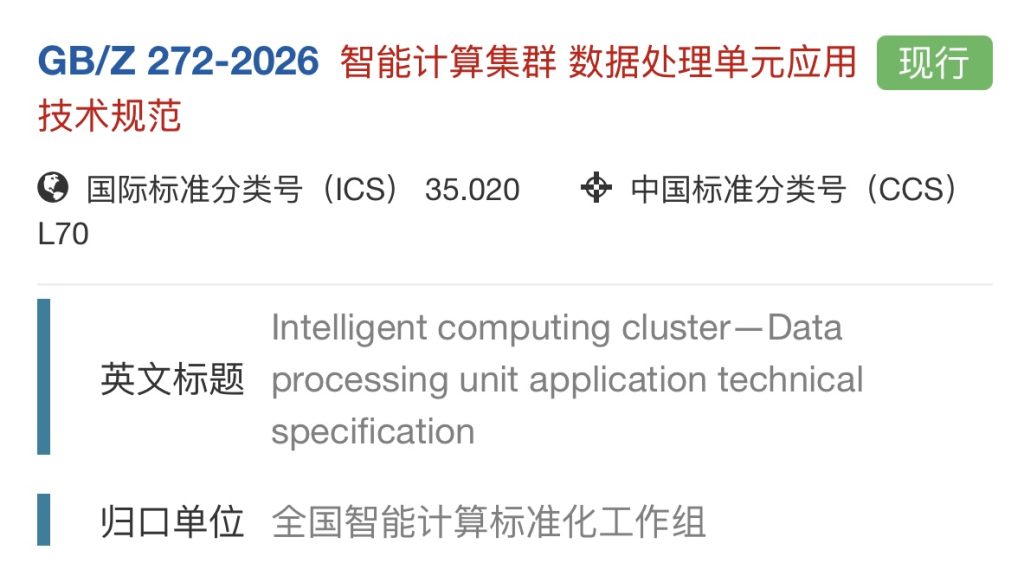
Led by the China Academy of Information and Communications Technology (CAICT), this standard was jointly compiled by a number of leading technology enterprises in the industry. It defines a full set of technical criteria for Data Processing Units (DPUs) deployed in intelligent computing clusters. The scope covers DPU chip R&D and design, as well as deployment, implementation, operation, maintenance and management in servers and intelligent computing clusters. It establishes a unified benchmark for downstream customers in product selection, evaluation, testing and verification. Targeting prominent industrial pain points, the standard addresses challenges including heterogeneous architectures across vendors, the absence of unified benchmarks for performance comparison, poor system compatibility, and a lack of standardized acceptance criteria for projects.
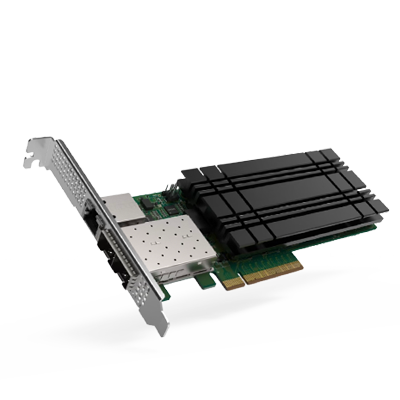
Resnics took an active and in-depth part in the standard-setting process. Drawing on practical experience from its self-developed DPUs, programmable SmartNICs, high-speed storage and network offloading solutions, the company contributed to discussions on key clauses such as network acceleration and cluster interconnection. This demonstrates its technical strength in domestically developed DPU chips and high-performance computing interconnection, further elevating its influence within the sector.
Going forward, Resnics will continue to leverage its strengths in in-house chip development and focus on cutting-edge areas of intelligent computing and high-speed AI interconnection while staying committed to independent innovation. Building upon this national standard, the company will consolidate the chip-layer foundation of computing infrastructure, drive product iteration and ecosystem compatibility through standardization, and push forward the rollout of fully domestic solutions. It aims to empower digital transformation across industries and reinforce the security foundation of computing infrastructure.